Is Your Fuel Tank Ready for the Season? A Quick Safety Check Could Prevent Costly Problems
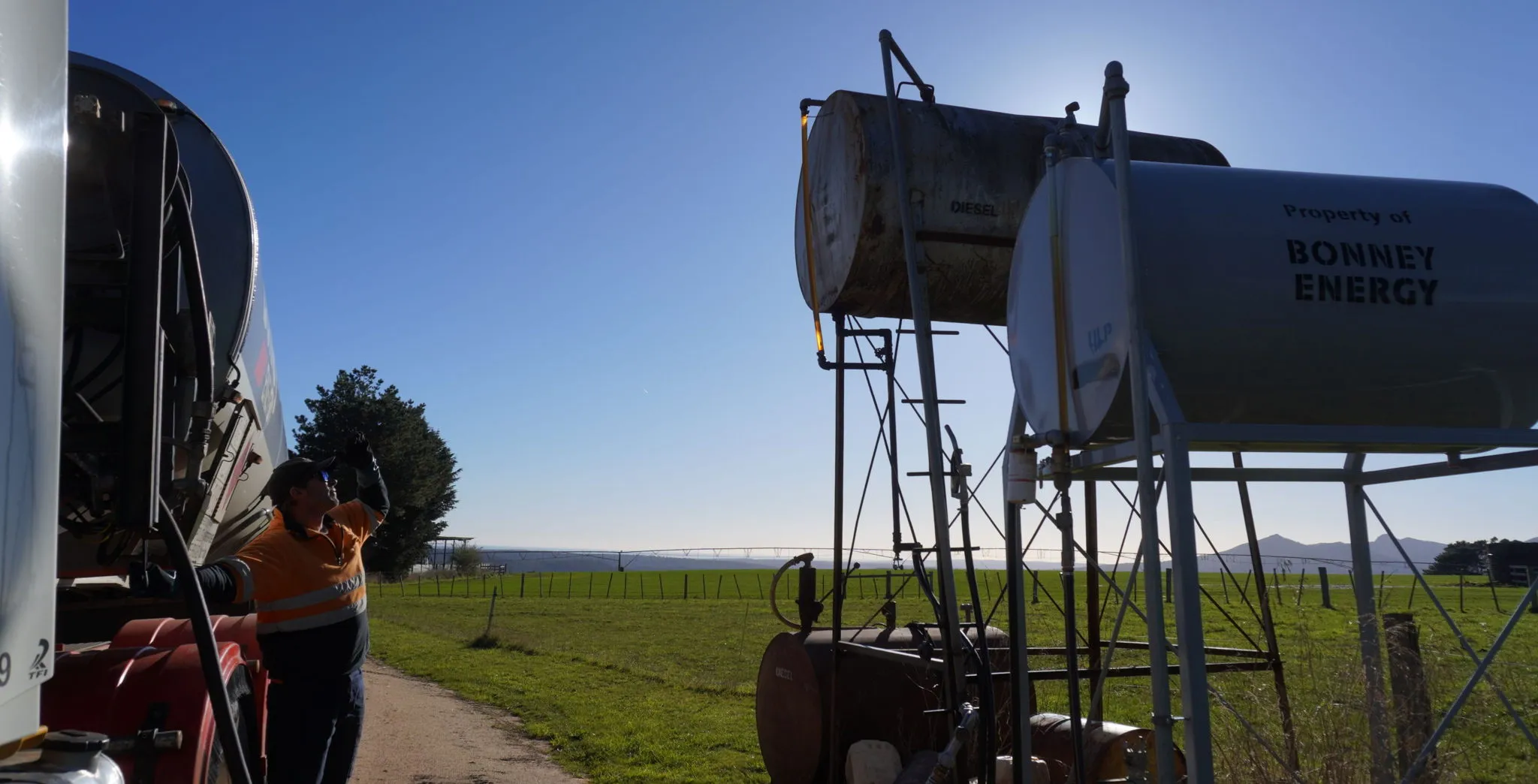
Above-ground fuel tanks are a critical part of many farming and business operations, but they're often overlooked until something goes wrong.
A damaged ladder, corroded support, leaking hose, or blocked vent may seem minor, but these issues can quickly lead to fuel spills, equipment downtime, environmental damage, or safety incidents.
With fuel storage playing such an important role in day-to-day operations, regular inspections and preventative maintenance remain one of the simplest ways to protect people, property, and productivity.
What Should You Be Checking?
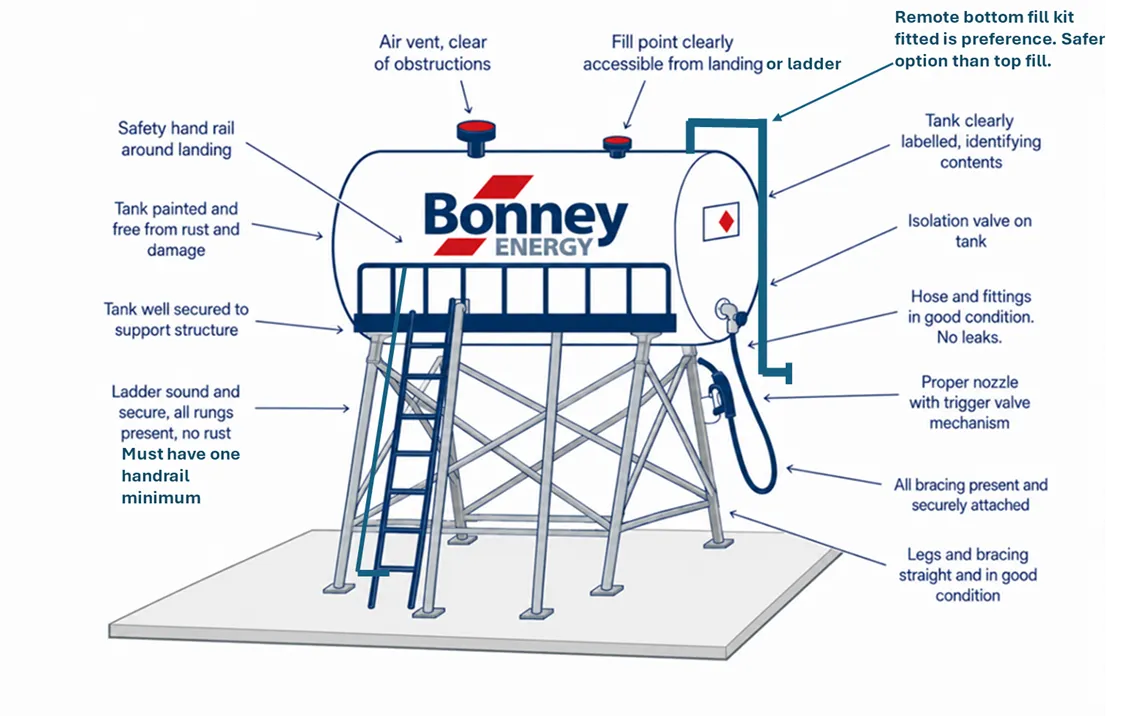
A routine tank inspection doesn't need to be complicated. Key areas to review include:
- Tank condition, including rust, corrosion, or structural damage
- Supports, braces, and foundations
- Ladders, handrails, and safe access points
- Hoses, fittings, valves, and nozzles
- Air vents and tank labelling
- Fire extinguishers and emergency equipment
- The surrounding area for trip hazards, obstructions, rubbish, or dry vegetation
Keeping the area around the tank clear is just as important as maintaining the tank itself. Safe access can help prevent injuries during both refuelling and fuel deliveries.
Making Fuel Deliveries Safer
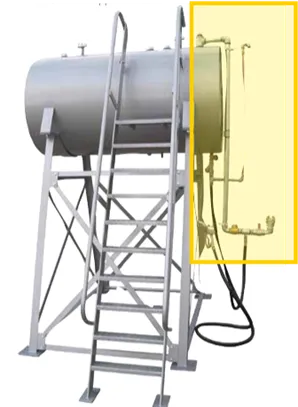
Many older elevated tanks still require drivers to access the top of the tank during deliveries. Carrying fuel hoses up ladders presents unnecessary risks and is no longer considered best practice.
Where possible, consider installing a bottom-fill kit, allowing fuel deliveries to be completed safely from ground level. This simple upgrade can significantly improve safety for both drivers and site personnel.
Protecting Your Tank from Vehicle Damage
Fuel tanks are frequently located in busy work areas where tractors, utes, trucks, and machinery operate daily.
Installing protective bollards, barriers, or railings can help prevent accidental impacts that may damage tanks, pipework, or dispensing equipment. Positioning tanks away from high-traffic zones can also reduce risk.
Don't Forget Spill Containment
A small leak can quickly become a costly environmental issue.
A spill containment setup should include:
- Spill kits with instructions, absorbent materials, brooms, waste bags, and personal protective equipment.
- Adequate capacity to hold potential spills and ensure incompatible substances do not mix.
- Bunding systems (concrete or compacted earth) cleaned regularly and kept clear of debris.
- Bund drains that remain closed when fuel is being stored.
Spill clean-up materials must be accessible to anyone on-site.
Fire Protection Matters
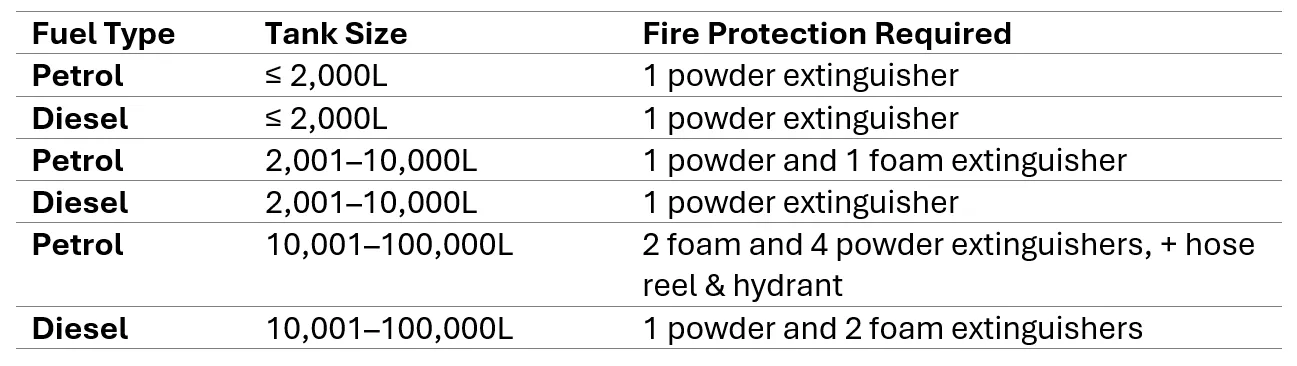
The type and quantity of fuel stored on-site determines the fire protection requirements for your facility.
Ensuring extinguishers are suitable, accessible, and maintained is a critical part of fuel storage safety. Emergency response procedures should also be reviewed regularly so everyone on-site knows what to do in the event of an incident.
A Small Investment in Maintenance Can Prevent Major Costs
Regular inspections, good housekeeping, effective spill containment, and appropriate fire protection all contribute to safer fuel storage.
Every property is different, and fuel storage requirements can vary depending on tank size, location, and operational needs. If you're unsure whether your setup meets current best practice, contact your Bonney Energy representative for advice on safe fuel storage, containment options, and refuelling equipment.